
Yerindən reportaj: yerli xəbərlərin ictimai təsiri və əsas istiqamətlər
Local reporting remains a primary channel through which communities receive information that affects daily life and public safety. Recent discussions about disaster impact communication and public awareness underline the central role that journalists and media professionals play at the community level. A one-day national media training on Disaster Impact Communication and Public Awareness was held on Friday, 21 November 2025, in Dili, co-hosted by the Civil Protection Authority (CPA) and UNESCO.
That training serves as a timely reminder that local newsrooms must balance speed with responsibility, and that field reporting has tangible consequences for how people perceive risk and act in emergencies. The lessons to draw extend beyond disaster contexts: accuracy, inclusion and clarity are foundational to the public impact of local journalism in all beats.
The role of local reporting in shaping public understanding
Local reporters are often the most trusted and immediate source of information for residents. They translate complex developments into actionable information, report on official directives, and reflect community concerns back to decision-makers. This proximity gives local journalism unique influence over how an event is framed and understood.
Because local outlets operate within the communities they cover, their coverage can directly affect behavior—particularly in situations that demand rapid public response. Reporting that contextualizes official guidance, explains risks clearly and identifies reliable sources can reduce confusion and support coordinated action. Conversely, incomplete or sensationalized accounts risk undermining public trust and complicating response efforts.
Ethical and inclusive practices in field reporting
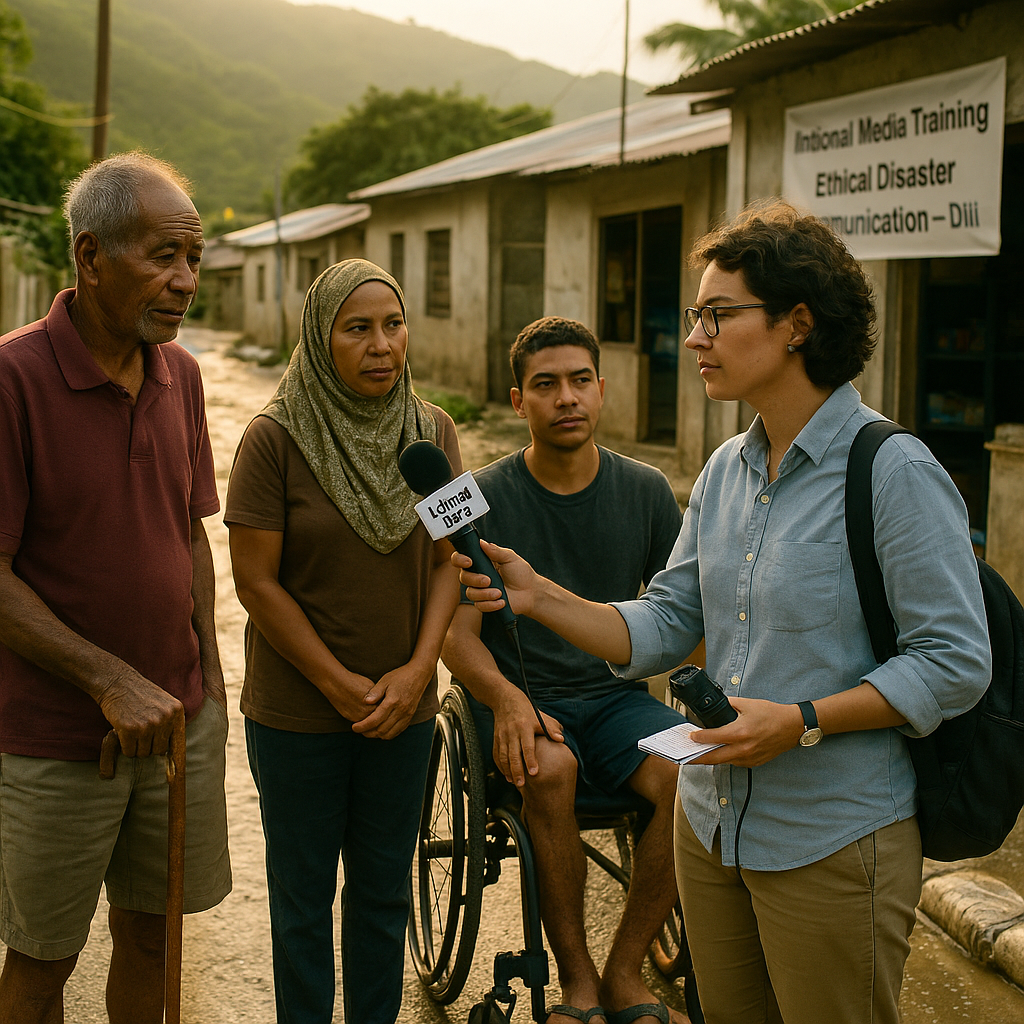
Ethics in local reporting require attention to accuracy, respect for affected populations and sensitivity to vulnerabilities. Inclusive reporting means seeking voices that are often marginalized, ensuring accessibility of information, and avoiding language that stigmatizes. These considerations are especially important in disaster reporting, where certain groups may face disproportionate impacts.
Training initiatives that focus on ethical and inclusive disaster reporting, such as the national session in Dili co-hosted by the CPA and UNESCO, emphasize the need for practical techniques alongside ethical frameworks. Techniques include verifying information from multiple sources, clear attribution, and avoiding the amplification of rumors. Ethical frameworks guide choices about imagery, privacy, and the treatment of trauma in stories.
Key directions for responsible local journalism
Three practical directions emerge for local reporters and editors seeking to increase public impact responsibly. First, prioritize clear, verifiable information that directly helps audiences make informed decisions. Second, design coverage to include diverse perspectives and to consider accessibility for all audiences. Third, coordinate with official communication channels when appropriate, while maintaining editorial independence.
Capacity-building events focused on disaster impact communication and public awareness highlight how preparedness and reporting intersect. When journalists understand the principles of risk communication, they can better translate technical guidance into everyday language and identify trustworthy local sources. This strengthens the information environment that communities rely on before, during and after crises.
Conclusion
Field reporting has a measurable influence on public perception and behavior. Ethical, inclusive and clear local journalism reduces harm and enhances collective resilience. The national media training in Dili on 21 November 2025, co-hosted by the Civil Protection Authority and UNESCO, underscores the continuing need for training and reflection on how newsrooms approach disaster-related coverage.
As local media adapt to evolving challenges, grounding reporting practices in verified information, ethical considerations and inclusivity will remain essential. These principles help ensure that reporting from the ground serves the public interest and supports communities in moments of uncertainty.